


New Construction Series: Episode 2-Site Prep and Laying the Foundation

From Dirt to Keys: Episode 2 - Site Prep and Laying the Foundation New Construction Series-Episode 2
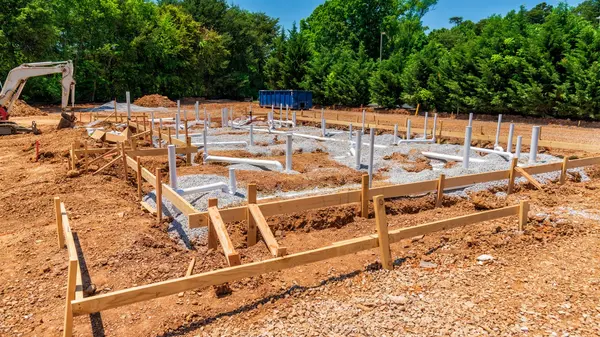
Episode 1, we stood on a bare lot and talked about topography, drainage, and how the home would sit on the land. Now it's time to get our hands dirty. This episode covers everything that empty lot to the first step of the foundation, the stage that literally holds the house up.
In this episode, our team breaks down four things every new construction buyer should understand.
1. Post Tension Slabs
Most homes in Central Texas sit on a post tension slab. Before the concrete is poured, a grid of steel cables is laid across the slab area. After the concrete cures, those cables are pulled tight and anchored. That tension helps the slab resist cracking and movement.
Why does that matter here? Our clay soil swells when it is wet and shrinks during our long, dry summers. A post-tension slab is built to handle that movement much better than plain concrete.
Buyer Tip: Never drill, cut, or core into a post-tension slab without checking with the builder first. Those cables are under serious tension, and cutting one is dangerous and expensive to repair.
2. Floaters (and why they matter)
A foundation isn't just one flat sheet of concrete. Some areas are poured at a different level than the main slab, and those lower areas are called floaters.
You'll usually see them in places like:
Front and back porches: The porch sits a little lower than your living space, so rainwater drains away from the house instead of running inside.
Mud-set Showers: The shower area is dropped lower so there's room for a thick mortar bed underneath the tile. That lets the floor slope toward the drain and creates a flush, curbless entry, with no step into the shower.
Why it matters: Floaters have to be planned before the concrete is poured, because they are formed right into the slab. That's why it's important to lock in design choices like mud-set showers during the design process. Once the slab is poured, changing it becomes difficult and expensive, if possible at all.
Buyer tip: If you want a walk-in shower, make sure it's in your plans and on the builder's selections before the foundation stage. Then take a look at the slab before the pour to confirm the drop is where it should be.
Recent Posts
From Dirt to Keys-New Construction Series

The Ultimate Guide for First-Time Home Buyers

Top 10 Things To Do To Get Your Home Ready To Sell

February 10, 2024 Newsletter

February 24, 2023 Newsletter

January 27, 2023 Newsletter

January 13, 2023 Newsletter

December 30, 2022 Newsletter

December 16, 2022 Newsletter

Sherri's passion is to not only guilde her clients through any transaction smoothly, but to also educate her clients every step of the way so that they are able to make the best informed decisions possible!